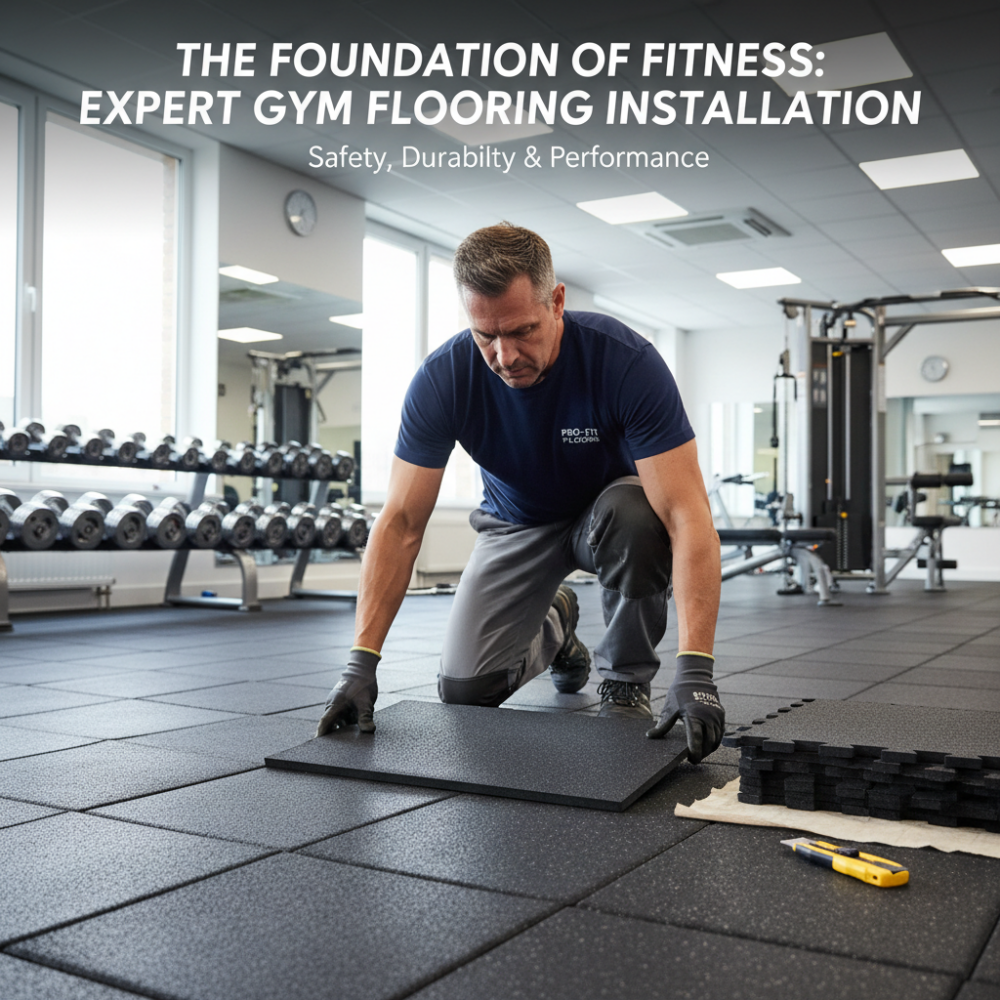
Proper gym flooring installation is critical for creating a safe, durable, and professional workout environment. The right installation ensures longevity, performance, and safety, while preventing damage to equipment and subfloors. Whether you’re building a new gym or upgrading an existing facility, understanding the installation process is essential for commercial gyms, fitness studios, and training centers.
At Fitness Flooring, we specialize in providing professional gym flooring installation services for rubber gym flooring, athletic rubber flooring, and fitness studio floors across the US.
Why Professional Gym Flooring Installation Matters
Investing in professional gym flooring installation ensures:
- Safety: Prevents slips, trips, and uneven surfaces.
- Durability: Correct installation maximizes flooring lifespan.
- Equipment Protection: Prevents damage to floors from heavy weights and machines.
- Aesthetic Finish: Seamless appearance with precise alignment.
- Warranty Compliance: Professional installation often validates manufacturer warranties.
Improper installation can lead to premature wear, unsafe conditions, and costly repairs.
Types of Gym Flooring and Installation Methods
Rubber Gym Flooring Rolls
- Ideal for large gyms and weight rooms.
- Provides seamless surfaces with minimal joints.
- Professional installation ensures proper adhesion and alignment.
Interlocking Rubber Tiles
- Flexible, easy-to-install option over existing subfloors.
- Tiles interlock for a secure fit and easy replacement of damaged sections.
- Best for multi-purpose rooms and high-traffic areas.
Recycled Rubber Flooring
- Eco-friendly and durable.
- Requires careful installation to maintain performance and aesthetics.
- Popular in functional training and CrossFit areas.
Hardwood and Laminate Flooring
- Suitable for studios, dance, and aerobics areas.
- Requires precise subfloor preparation and acclimatization.
- Professional installation prevents warping and unevenness.
Step-by-Step Gym Flooring Installation Process
- Subfloor Preparation:
- Clean, level, and dry the subfloor.
- Remove debris, nails, or uneven surfaces.
- Material Selection:
- Choose flooring type, thickness, and finish based on facility needs.
- Acclimatization (if needed):
- Hardwood and some rubber products need to acclimate to room temperature.
- Layout Planning:
- Measure and mark flooring layout to ensure seamless installation.
- Installation:
- Rolls: glued or loose-laid depending on type.
- Tiles: interlocked or glued, ensuring tight seams.
- Finishing Touches:
- Trim edges, seal seams if required, and inspect for gaps or uneven areas.
- Post-Installation Inspection:
- Test surface for safety, evenness, and performance.
Professional installers, like Fitness Flooring, ensure each step is executed correctly for long-lasting results.
Maintenance After Installation
Even the best flooring requires proper maintenance to maximize lifespan:
- Daily Cleaning: Sweep or vacuum to remove dust and debris.
- Spill Management: Wipe spills immediately to prevent staining or damage.
- Deep Cleaning: Use neutral cleaners weekly or monthly depending on traffic.
- Periodic Inspection: Check for lifting edges, tears, or uneven tiles.
- Protective Measures: Use mats under heavy machines to prevent indentations.
Proper care ensures your gym flooring stays safe, attractive, and functional for years.
Common Installation Mistakes to Avoid
- Skipping Subfloor Preparation: Leads to uneven surfaces and premature wear.
- Incorrect Adhesive or Gluing: Can cause flooring to lift or shift.
- Ignoring Expansion Gaps: Particularly important for hardwood or laminate.
- Improper Tile Alignment: Causes gaps and uneven edges.
- DIY Installation Without Expertise: May void warranties and compromise safety.
Hiring experienced professionals avoids these mistakes and guarantees a safe, long-lasting floor.
FAQs About Gym Flooring Installation
Q1: How long does gym flooring installation take?
A: Depends on flooring type and gym size; typically 1–5 days for commercial installations.
Q2: Can flooring be installed over concrete?
A: Yes. Proper subfloor prep and professional installation ensure durability.
Q3: Do I need professional installation for rubber flooring?
A: While DIY is possible, professional installation ensures longevity, safety, and warranty compliance.
Q4: How often should I inspect my gym flooring?
A: Regular inspections (monthly or quarterly) help identify wear, gaps, or safety issues early.
Q5: Can fitness studio floors be replaced section by section?
A: Interlocking tiles or modular systems allow partial replacement without removing the entire floor.