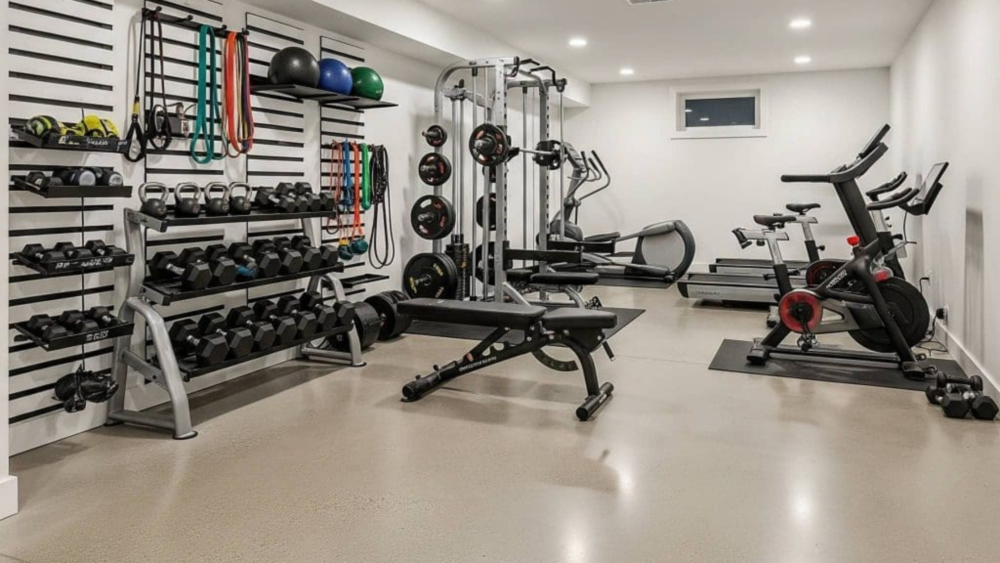
Introduction
Setting up a home gym is an exciting project, but the flooring you choose will make or break your workout experience. The right flooring ensures safety, protects your subfloor, and enhances performance for every exercise, from cardio to strength training.
At Fitness Flooring, we specialize in premium home gym solutions for basements, garages, and spare rooms. With over 50 years of experience, we provide flooring that is durable, safe, and built to last—helping fitness enthusiasts create a professional gym experience at home.
Why Home Gym Flooring Matters
1. Safety First
High-impact workouts, free weights, and cardio machines can strain joints and increase the risk of slips and injuries. Proper rubber flooring absorbs shock and reduces strain on knees, ankles, and back.
2. Protects Your Subfloor
Weights and equipment can damage concrete, laminate, or hardwood floors. Rubber mats or rolls protect your subfloor from dents, scratches, and cracks, ensuring long-lasting home gym performance.
3. Noise Reduction
Basements or garages can amplify sound from equipment and exercises. Rubber flooring reduces noise, creating a comfortable and less disruptive environment for your household.
4. Performance and Stability
Stable, cushioned flooring provides better traction, balance, and control during workouts. This allows for safer, more effective movements, whether lifting weights, jumping, or doing floor exercises.
Types of Home Gym Flooring
1. Interlocking Rubber Tiles
- Best For: Small spaces and modular home gyms
- Features:
- DIY-friendly, easy to install
- Replace individual tiles as needed
- Slip-resistant and cushioned surface
- Benefits: Flexible, cost-effective, and ideal for multi-use home gyms
2. Rubber Rolls
- Best For: Weightlifting areas or larger spaces
- Features:
- Seamless, continuous flooring
- High shock absorption for heavy equipment
- Durable and easy to clean
- Benefits: Professional-grade appearance with long-term durability
3. Foam or Vinyl Mats
- Best For: Yoga, Pilates, or low-impact exercises
- Features:
- Lightweight and cushioned
- Non-slip and moisture-resistant
- Portable and easy to store
- Benefits: Comfortable surface for stretching and floor-based workouts
4. Poured Rubber Flooring
- Best For: Multi-purpose home gyms or high-traffic areas
- Features:
- Customizable thickness and color
- Durable, continuous surface
- Handles equipment, cardio, and group fitness
- Benefits: Long-lasting, professional-grade finish
Factors to Consider When Choosing Flooring
- Type of Workouts
- Heavy lifting → thicker rubber rolls
- Cardio or HIIT → modular mats
- Yoga or Pilates → cushioned foam mats
- Space and Layout
- Measure your gym area to choose tiles, rolls, or poured flooring
- Maintenance
- Rubber flooring is low-maintenance, easy to sweep and mop
- Foam mats may wear faster in high-traffic areas
- Budget
- Tiles → cost-effective and DIY-friendly
- Rolls or poured rubber → higher initial cost, long-lasting performance
- Noise Reduction
- Rubber mats or rolls dampen sound, perfect for basement or apartment gyms
Installation Tips
- Clean and level your subfloor
- Interlocking tiles → DIY-friendly
- Rubber rolls or poured surfaces → professional installation recommended
- Regular maintenance → sweep, mop, inspect for wear
Case Study: Kelly T Home Gym
Kelly T transformed her basement into a full home gym. Fitness Flooring installed interlocking rubber mats, creating a durable, cushioned, and safe workout space.
Benefits:
- Shock absorption for joints
- Noise reduction for upstairs rooms
- Easy cleaning and maintenance
- Professional gym feel at home
FAQs
Q1: Can I install flooring myself?
Yes, interlocking tiles are DIY-friendly. Rubber rolls or poured surfaces require professional installation.
Q2: How thick should home gym flooring be?
- 1/4”–3/8” for cardio & general exercises
- 1/2”–3/4” for free weights & heavy equipment
Q3: Is rubber flooring safe for children?
Absolutely. Rubber mats are shock-absorbing, non-toxic, and slip-resistant.
Q4: Can the flooring handle multiple activities?
Yes, modular and rolled rubber flooring works for weights, cardio, yoga, and stretching.
Q5: How do I clean and maintain the flooring?
- Sweep or vacuum regularly
- Mop with mild soap and water
- Replace tiles in high-use areas if necessary
Why Choose Fitness Flooring
- 50+ years of expertise in home and commercial gyms
- Custom solutions for every space, workout type, and budget
- High-quality, durable materials
- Nationwide service and professional guidance
- Proven results with hundreds of successful home gyms
Conclusion
Home gym flooring is not just a surface—it’s the foundation for safety, performance, and longevity. Fitness Flooring provides rubber mats, rolls, tiles, and poured surfaces that transform any basement or garage into a professional gym. Protect your joints, equipment, and subfloor while creating a space that motivates you to train safely and effectively.
Ready to create your dream home gym? Contact Fitness Flooring for a free consultation today! Call 800-428-5306 or Chat With Us Live.