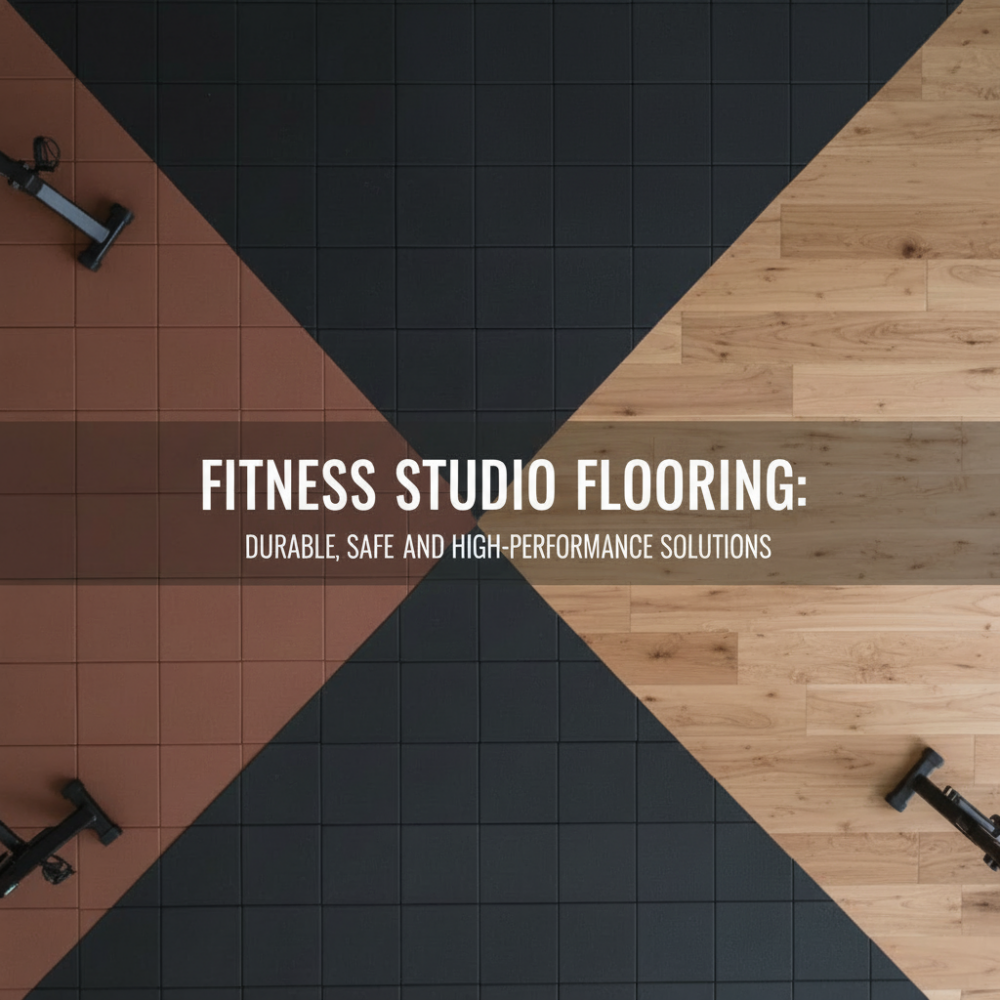
A well-designed fitness studio flooring is the backbone of every workout space. It directly impacts athlete safety, workout performance, and overall facility aesthetics. Whether your studio focuses on yoga, Pilates, strength training, or high-intensity interval training (HIIT), selecting the right flooring ensures a comfortable, durable, and safe environment for your clients.
At Fitness Flooring, we specialize in providing premium rubber fitness flooring, athletic rubber flooring, and tailored solutions for commercial fitness studios across the US.
Why Choosing the Right Fitness Studio Flooring Matters
Selecting the right fitness studio flooring is critical for:
- Safety and Injury Prevention: Proper flooring reduces slips, falls, and joint strain.
- Durability: High-quality flooring withstands heavy foot traffic, equipment, and repetitive movements.
- Noise Reduction: Essential for studios with group classes or high-impact workouts.
- Performance Optimization: Provides grip and stability for diverse fitness routines.
- Aesthetic Appeal: Complements studio branding and enhances client experience.
The wrong flooring can compromise safety, increase maintenance costs, and negatively affect client satisfaction.
Types of Fitness Studio Flooring
Rubber Fitness Flooring
- Ideal for high-impact workouts, HIIT, and weightlifting zones.
- Provides shock absorption to protect joints.
- Durable, slip-resistant, and easy to maintain.
- Can be customized in color, thickness, and branding elements.
Interlocking Rubber Tiles
- Flexible and easy to install over existing surfaces.
- Perfect for functional training zones, Pilates, or yoga studios.
- Allows for easy replacement of damaged tiles without full floor replacement.
Hardwood Flooring
- Traditional choice for dance, yoga, or barre studios.
- Smooth, elegant surface with excellent grip.
- Requires periodic refinishing and proper climate control to maintain longevity.
Vinyl or Laminate Flooring
- Cost-effective alternative for low-impact areas.
- Water-resistant and easy to clean.
- Provides moderate shock absorption but may not be suitable for heavy weightlifting.
Key Features to Look for in Fitness Studio Flooring
- Shock Absorption: Protects joints during high-impact activities.
- Slip Resistance: Essential for safe movements in yoga, HIIT, or aerobics.
- Durability: Must withstand daily foot traffic, equipment, and sweat.
- Aesthetic Customization: Color, patterns, and logos for branding.
- Ease of Cleaning: Smooth, water-resistant surfaces reduce maintenance time.
- Versatility: Flooring should support multiple activities without compromising safety.
Installation Considerations
Proper installation ensures long-lasting performance:
- Subfloor Preparation: Clean and level subfloor is essential.
- Professional Installation: Ensures seamless coverage and prevents gaps.
- Adhesive vs. Interlocking: Decide based on studio use, traffic, and budget.
- Expansion and Contraction: Flooring should accommodate temperature and humidity changes.
At Fitness Flooring, our team provides expert installation guidance to maximize longevity and performance.
Maintenance Tips for Fitness Studio Flooring
Proper care extends the life of your flooring and maintains safety:
- Daily Cleaning: Sweep or vacuum to remove dust and debris.
- Spot Cleaning: Wipe spills immediately to prevent damage.
- Periodic Deep Cleaning: Mop with neutral cleaners suitable for rubber or vinyl surfaces.
- Equipment Pads: Use protective mats under heavy machines to prevent dents.
- Regular Inspection: Identify wear, tears, or lifting edges early to prevent accidents.
Benefits of Rubber Fitness Flooring in Studios
Rubber fitness flooring has become the go-to choice for commercial fitness studios due to:
- Joint Protection: Cushions high-impact movements.
- Noise Control: Reduces sound from jumping, weight drops, and group workouts.
- Durability: Handles daily heavy use without significant wear.
- Eco-Friendly Options: Recycled rubber is sustainable and cost-effective.
- Customizable Appearance: Studio branding, colors, and logos can be integrated.
FAQs About Fitness Studio Flooring
Q1: What type of flooring is best for yoga and Pilates studios?
A: Rubber tiles or hardwood with high-quality finishes are ideal for grip and stability during poses.
Q2: Can fitness studio flooring handle high-impact workouts?
A: Yes. Rubber fitness flooring absorbs impact, protects joints, and reduces noise.
Q3: How long does professional fitness studio flooring last?
A: With proper maintenance, rubber or hardwood flooring can last 10–15 years in commercial studios.
Q4: Can I install fitness studio flooring over existing floors?
A: Yes. Interlocking tiles or rubber rolls can often be installed over concrete, wood, or vinyl subfloors with proper preparation.
Q5: Is flooring maintenance complicated?
A: No. Most professional flooring options require simple daily cleaning, periodic deep cleaning, and regular inspection for longevity.