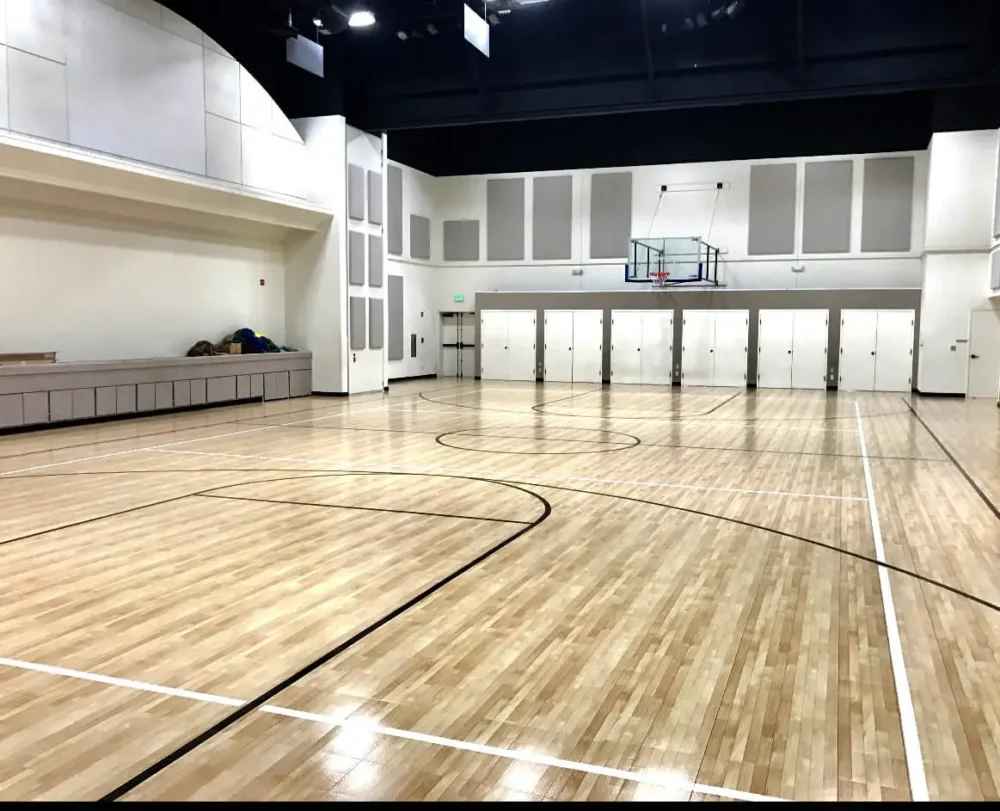
Basketball is more than a game—it’s a combination of skill, agility, and endurance. Whether you’re managing a school gym, a professional sports facility, or a home court, the quality of your basketball court flooring directly impacts performance, safety, and long-term durability. Choosing the right flooring is not just a matter of aesthetics; it is a critical investment in the players’ safety and your facility’s reputation.
At Fitness Flooring, we have over 50 years of experience supplying high-quality sports and gym flooring across the United States. From indoor hardwood courts to modular outdoor surfaces, we help you select the flooring that meets your facility’s unique needs.
Why Basketball Court Flooring Matters
1. Player Safety
Basketball is a high-impact sport. Players constantly jump, pivot, and stop abruptly. Proper flooring absorbs shock, reducing stress on knees, ankles, and joints. Unsafe or worn-out surfaces can lead to injuries and liability issues for facility managers.
2. Consistent Performance
The bounce of the basketball, traction for quick movements, and grip for sudden pivots depend on the flooring type. Professional-grade surfaces like maple hardwood or high-quality modular tiles provide uniform bounce and consistent traction.
3. Durability and Longevity
A basketball court floor is a long-term investment. Facilities with high traffic require surfaces that can withstand heavy use, spills, and equipment movement without warping, cracking, or losing traction. Choosing the right material ensures longevity and reduces maintenance costs.
Types of Basketball Court Flooring
1. Hardwood Flooring
- Best For: Indoor gyms, professional courts, school facilities
- Material: Solid maple or engineered wood
- Benefits:
- Classic professional look
- Superior bounce and rebound consistency
- Excellent traction and player comfort
- Considerations:
- Requires climate control to prevent warping
- Professional installation recommended
- Ideal For: High schools, universities, indoor athletic centers
2. Rubber and Modular Tiles
- Best For: Multi-use gyms, community centers, and home courts
- Material: Interlocking rubber or polypropylene tiles
- Benefits:
- Shock absorption for joints
- DIY-friendly installation
- Low maintenance and slip-resistant
- Considerations:
- Bounce is slightly different than hardwood
- Ideal for multipurpose or recreational spaces
- Ideal For: Fitness studios, local YMCA, indoor/outdoor recreational courts
3. Poured Court Flooring
- Best For: Multi-purpose spaces and schools
- Material: Seamless rubber or synthetic poured surfaces
- Benefits:
- Customizable thickness and color
- Ideal for gymnasiums hosting multiple events
- Minimal seams reduce tripping hazards
- Considerations:
- Requires professional installation
- Higher upfront cost but long-lasting
Key Features to Consider When Choosing Flooring
1. Shock Absorption and Joint Protection
High-impact sports like basketball can strain joints. Flooring should cushion landings without compromising stability. Fitness Flooring’s premium surfaces offer superior shock absorption, reducing fatigue and injury risk.
2. Traction and Slip Resistance
Traction prevents slips and enhances agility. Look for flooring with a non-slip surface that maintains grip even when wet from sweat or cleaning.
3. Maintenance and Cleaning
High-traffic courts need easy-to-clean surfaces. Hardwood requires refinishing every few years, while rubber tiles and poured floors are low-maintenance and resistant to stains and moisture.
4. Multi-Purpose Use
Many facilities host assemblies, events, and other sports. Multi-purpose floors can withstand heavy traffic, weight equipment, and foot traffic without sacrificing basketball performance.
5. Aesthetic and Branding Options
Customizable flooring allows you to incorporate school colors, logos, and court markings for a professional, branded look that enhances your facility’s appeal.
Why Choose Fitness Flooring for Your Basketball Court
- 50+ Years of Experience: With decades in sports and gym flooring, we know what works for schools, professional arenas, and community centers.
- Proven Results: Hundreds of basketball court installations nationwide, from home gyms to large sports complexes.
- Expert Consultation: Our team guides you through every step, from selecting materials to professional installation.
- High-Quality Materials: We partner with trusted manufacturers to provide hardwood, rubber, and modular surfaces built to last.
- Custom Solutions: Whether it’s a full-size indoor court or a backyard modular setup, we tailor the flooring to your needs.
Installation Tips for a Perfect Court
1. Prepare the Subfloor
Ensure your concrete or asphalt base is level, clean, and dry. Proper subfloor preparation prevents uneven surfaces and premature wear.
2. Professional vs. DIY Installation
- Hardwood & Poured Courts: Professional installation recommended for perfect alignment, durability, and performance.
- Modular Rubber Tiles: DIY-friendly; snap-together systems allow easy installation with minimal tools.
3. Maintenance Practices
- Regular sweeping or vacuuming to remove dust
- Mop spills promptly
- Apply proper sealant for hardwood floors
- Inspect for damage periodically and repair promptly
Case Study: John Smith Athletic Pro Arena
The Sky High Sports Complex needed a high-performance basketball court capable of handling heavy traffic. Fitness Flooring installed a premium court with superior traction, shock absorption, and rebound consistency. Coaches and players reported improved game quality and reduced fatigue. The facility now hosts multiple tournaments annually without complaints about wear or performance.
FAQs
Q1: Can I use basketball flooring outdoors?
Yes! Modular interlocking tiles and poured surfaces from Fitness Flooring are designed for both indoor and outdoor use.
Q2: How long does a basketball court floor last?
With proper maintenance, commercial-grade flooring can last 10–20 years, depending on usage.
Q3: Do you offer custom court designs?
Absolutely! Our team can help create custom layouts, colors, and branding to match your school or facility identity.
Q4: How much does basketball court flooring cost?
Pricing depends on materials, size, and installation. Contact Fitness Flooring for a free consultation and estimate tailored to your project.
Q5: Can I install flooring myself?
DIY installation is possible for modular rubber tiles. Hardwood and poured courts require professional installation for optimal performance.
Conclusion
Choosing the right basketball court flooring is an investment in safety, performance, and durability. The right surface supports players, reduces injuries, and enhances the overall experience for athletes and spectators alike.
At Fitness Flooring, we combine 50+ years of expertise, premium materials, and nationwide installation services to ensure your basketball court is built to last. Whether you’re managing a school gym, commercial facility, or home court, we have the perfect solution.
Ready to upgrade your basketball court? Contact Fitness Flooring today for a free consultation and let our experts guide you to the perfect surface for your facility.Call 800-428-5306 orChat With Us Live.