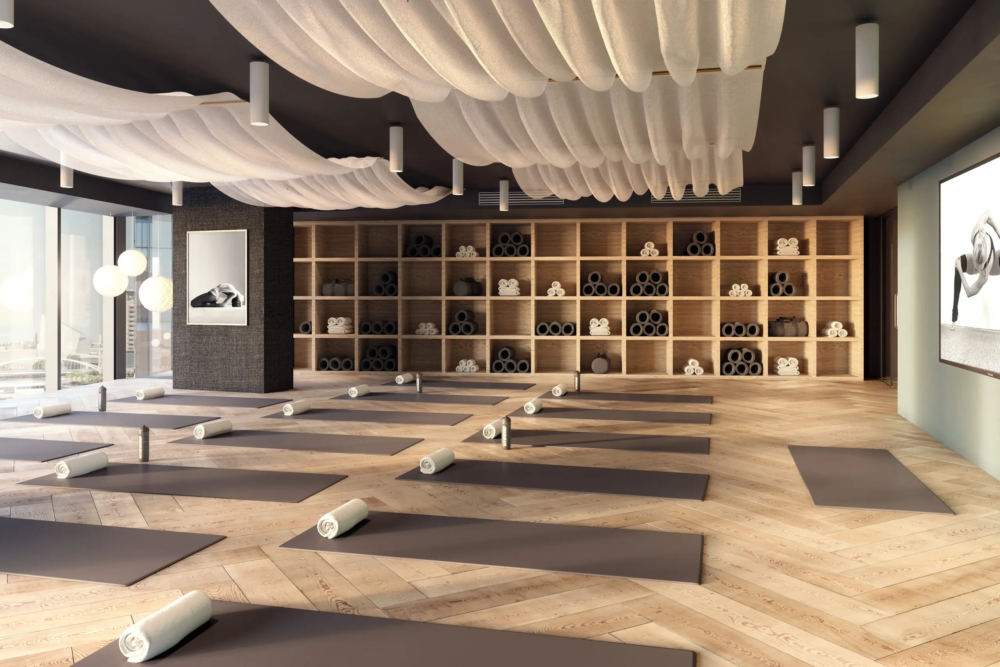
Hot yoga studios push flooring to its limits. Heat, humidity, and sweat create a uniquely demanding environment, and the wrong surface can quickly turn a wellness space into a liability risk. Today, studio owners are turning to AI-powered safety assessment tools to evaluate hot yoga flooring before a single mat or tile is installed. By modeling heat exposure, moisture buildup, and slip risk in advance, these tools give owners a data-backed path to predictive studio safety instead of guesswork.
At Fitness Flooring, we combine over 50 years of hands-on flooring experience with modern AI-assisted planning so hot yoga studios get a surface that performs under heat, grips reliably when wet, and lasts for years of daily classes.
Why Hot Yoga Studios Need a Different Flooring Approach
Standard gym flooring is built for impact and weight. Hot yoga flooring has a different job entirely — it has to stay safe and stable at room temperatures that often exceed 95–105°F, while bodies are constantly sweating directly onto the surface. Three risks define this environment:
- Heat-driven material breakdown — some surfaces soften, off-gas, or warp under sustained high heat
- Moisture accumulation — sweat pooling on the wrong surface creates a serious slip hazard
- Hygiene buildup — porous or seamed materials trap bacteria and odor in warm, damp conditions
An AI-powered safety assessment models all three variables together, rather than evaluating them one at a time the way a traditional spec sheet does.
How AI-Powered Safety Assessment Works for Hot Yoga Flooring
1. Heat and Moisture Simulation
Predictive models use studio dimensions, average class temperature, and humidity levels to estimate how a flooring material will behave over months of continuous heat cycling. This flags materials prone to softening, curling, or off-gassing before installation begins.
2. Slip-Risk Scoring
AI tools assign a slip-risk score based on surface texture, sweat absorption rate, and foot-traffic patterns specific to yoga poses — standing balance poses place very different pressure on flooring than seated stretches do.
3. Predictive Maintenance Forecasting
Beyond initial safety, AI-driven forecasting estimates how quickly a surface will need cleaning, resealing, or replacement under sustained heat and moisture exposure, helping studio owners budget accurately.
4. Layout and Zoning Recommendations
Some AI planning tools also recommend zoning — for example, denser non-slip materials near the front of the room where balance poses concentrate, versus cushioned zones for floor-based sequences.
Best Flooring Materials for Hot Yoga Studios
1. Closed-Cell Rubber Flooring
- Best For: Studios running back-to-back heated classes
- Features: Non-porous, heat-stable, naturally slip-resistant when wet
- Benefits: Resists bacteria growth and holds up to daily sanitizing
2. Cork-Topped Composite Flooring
- Best For: Boutique studios prioritizing grip and comfort
- Features: Natural antimicrobial properties, excellent traction when damp
- Benefits: Comfortable underfoot while remaining stable in heat
3. Specialty Vinyl Yoga Surfaces
- Best For: Multi-use studios that host both hot yoga and other classes
- Features: Engineered texture for grip, easy to clean, heat-tolerant
- Benefits: Versatile, durable, and budget-friendly for growing studios
Key Features an AI Safety Assessment Will Flag
- Heat tolerance rating for sustained 95°F+ environments
- Slip resistance under wet/sweaty conditions, not just dry-surface ratings
- Antimicrobial or non-porous composition to limit bacteria buildup
- Subfloor compatibility and ventilation needs in high-heat rooms
- Long-term durability against daily heat-cool cycling
Installation and Maintenance Considerations
1. Subfloor Preparation
Hot yoga rooms need a subfloor that won’t trap moisture. Proper vapor barriers and ventilation planning prevent mold or warping beneath the finished surface.
2. Professional Installation
Because heat-rated adhesives and seamless seaming techniques are involved, professional installation is strongly recommended for hot yoga spaces rather than a DIY approach.
3. Ongoing Maintenance
- Sanitize daily with non-abrasive, surface-appropriate cleaners
- Inspect seams and edges monthly for heat-related lifting
- Schedule deep cleaning on a predictive schedule, not just a fixed calendar
Case Study: Applying Predictive Safety Planning
When a community fitness center added a hot yoga room inside an existing Multi-Purpose Floors facility, the design team modeled heat exposure and moisture levels before choosing a surface. The result was a closed-cell rubber installation with zoned traction mapping near the instructor platform. Since installation, the studio has reported zero slip-related incidents and significantly reduced odor complaints compared to its previous flooring.
FAQs About AI-Powered Hot Yoga Studio Flooring
Q1: Can AI really predict how flooring will perform in a hot yoga room?
Yes. By modeling heat exposure, humidity, and traffic patterns, predictive tools can estimate wear, slip risk, and maintenance needs with far more accuracy than generic spec sheets.
Q2: What’s the safest flooring type for hot yoga studios?
Closed-cell rubber and specialty vinyl surfaces are generally the safest, since they resist moisture absorption and maintain grip even when covered in sweat.
Q3: How often does hot yoga flooring need to be replaced?
With proper material selection and maintenance, quality hot yoga flooring typically lasts 7–12 years, though predictive maintenance forecasting can refine this estimate for your specific studio.
Q4: Does Fitness Flooring offer custom assessments for hot yoga spaces?
Yes. Our team combines decades of installation experience with AI-assisted planning tools to recommend the right material, layout, and maintenance plan for your studio’s specific heat and traffic conditions.
Q5: Is professional installation necessary for hot yoga flooring?
Yes — heat-rated adhesives, seamless seaming, and proper subfloor ventilation require professional installation to ensure long-term safety and performance.
Why Choose Fitness Flooring
- 50+ Years of Expertise: Nationwide flooring installations for studios of every size
- Predictive Planning: AI-assisted safety assessments tailored to heat and moisture conditions
- Heat-Rated Materials: Rubber, cork-composite, and specialty vinyl built for hot yoga
- Expert Guidance: From subfloor prep to ongoing maintenance scheduling
Conclusion
Choosing the right hot yoga flooring is no longer a matter of trial and error. With AI-powered safety assessment tools, studio owners can predict heat tolerance, slip risk, and maintenance needs before installation — protecting both members and their investment.
Fitness Flooring brings together five decades of real-world installation expertise with modern predictive planning to deliver hot yoga flooring that performs safely, class after class, year after year.