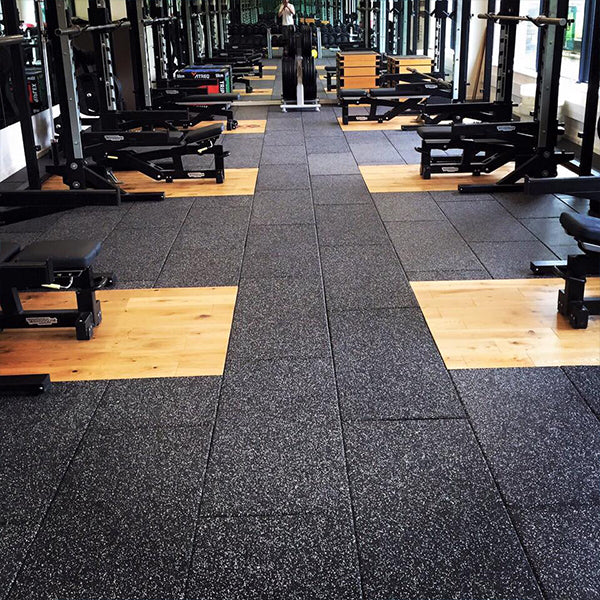
Every year, slip-and-fall injuries inside fitness facilities cost gym owners thousands in liability claims, medical costs, and lost members. The single most preventable cause? The wrong floor. Non-slip gym flooring is no longer optional for commercial gyms, fitness studios, school athletics, or home training rooms it is a baseline safety requirement that also protects your equipment, your sub-floor, and your facility’s long-term budget.
At Fitness Flooring, we have supplied and installed slip-resistant flooring for gyms, athletic facilities, recreation centers, and school gymnasiums across the United States for over 50 years. This guide covers everything you need to know about choosing the right non-slip surface for your specific facility.
What Makes Gym Flooring Non-Slip?
Not all gym flooring is created equal when it comes to traction. A surface that looks grippy in a showroom can become dangerously slick when covered in sweat, chalk dust, or cleaning solution. Genuine non-slip gym flooring achieves traction through:
- Surface texture raised patterns, diamond textures, or pebbled finishes that grip footwear and bare feet
- Material composition natural and recycled rubber offer inherent grip that synthetic alternatives often lack
- Shore hardness the right balance between firmness (for stability) and flex (for grip under load)
- Moisture management surfaces with open-cell or channeled designs that prevent water pooling
The ASTM coefficient of friction (COF) standard is the benchmark US gym operators should reference. A COF of 0.6 or above is widely recommended for fitness facilities but high-impact zones like free weight areas and group exercise rooms often benefit from surfaces rated above 0.8.
Why Traction Matters Differently Across Gym Zones
A single COF rating doesn’t tell the full story. Different areas of a gym create different slip conditions, and the right non-slip flooring should be matched to each zone:
1. Free Weight and Strength Training Areas
Dropped weights, chalk dust, and barefoot lifting create extreme traction demands. Thick rubber tiles (8mm–15mm) with high COF ratings are the standard, providing grip even when chalk and sweat accumulate between cleaning cycles.
2. Group Fitness and Aerobics Rooms
Fast lateral movements, jumping, and high-density traffic mean the floor must grip reliably across the entire surface not just in high-traffic lanes. Foam-backed rubber or sprung vinyl surfaces with textured top layers are well-suited for this zone.
3. Cardio Equipment Areas
Treadmill users and cyclists create concentrated moisture zones directly around machines. Rubber rolls or interlocking tiles with channeled drainage patterns reduce pooling and maintain grip during and after heavy use.
4. Locker Room Transitions and Wet Areas
Water tracked from showers and wet shoes creates a high-risk transition zone. Drainage mats and textured rubber tiles designed specifically for wet environments should cover any transition from wet to dry gym areas.
5. Yoga and Stretching Zones
Bare feet on a smooth surface create slip conditions even without sweat. Cork-topped composite or specialty yoga rubber surfaces provide grip at lower COF thresholds that remain comfortable for floor-based movement.
Best Non-Slip Gym Flooring Materials
1. Rubber Tiles Best All-Around Non-Slip Option
- Best For: Weight rooms, group fitness, multi-purpose gyms
- Thickness: 8mm–15mm for standard use; 15mm+ for Olympic lifting zones
- COF: Typically 0.8–1.0 on dry surfaces; 0.6–0.8 when wet
- Why It Works: Natural rubber composition provides inherent grip that doesn’t rely solely on surface texture
- See Fitness Flooring’s Rubberized Surfaces
2. Rubber Rolls Seamless Non-Slip Coverage
- Best For: Large open gym floors, cardio zones, school gymnasiums
- Thickness: 3/8″ (standard) to 3/4″ (heavy-duty lifting areas)
- Why It Works: No seams means no edges to catch feet; continuous texture provides consistent grip across the entire surface
- Bonus: Easier to clean than tiled surfaces, reducing moisture buildup between sessions
3. Poured Rubber Surfaces Maximum Durability
- Best For: High-traffic commercial gyms, school gyms, community centers
- Why It Works: Poured-in-place creates a seamless, custom-thickness surface with no joints the most consistent non-slip profile available
- Ideal for: Facilities needing ADA-compliant, barrier-free non-slip surfaces
- See Fitness Flooring’s PouredCourt Flooring
4. Interlocking Modular Tiles Flexible Non-Slip Solution
- Best For: Home gyms, boutique studios, temporary installations
- Why It Works: Modular tiles allow targeted replacement of high-wear, high-slip-risk zones without full floor replacement
- COF: Comparable to solid rubber tiles when high-quality rubber compound is used
How to Choose the Right Non-Slip Gym Flooring
Choosing the right surface requires matching four factors:
- Activity Type: Olympic lifting needs higher COF than yoga. Match the material to your facility’s dominant activities.
- Traffic Volume: Higher daily traffic accelerates surface wear. Commercial-grade rubber (vs. economy options) maintains COF ratings longer.
- Moisture Exposure: Studios with heavy sweat output or outdoor-adjacent spaces need surfaces specifically rated for wet-condition COF, not just dry.
- sub-floor Conditions: Concrete subfloors require proper moisture barrier assessment before rubber installation moisture transmission degrades adhesion and can reduce grip over time.
Installation and Maintenance for Long-Term Traction
Installation
- Use the correct adhesive system improper bonding allows tiles to shift, creating uneven surfaces and trip hazards
- Ensure sub-floor is level and dry before installation a 1/8″ variance over 10 feet is the maximum acceptable tolerance
- Install vapor barriers in below-grade (basement) gym spaces to prevent moisture transmission through rubber
- Fitness Flooring’s installation guidance
Ongoing Maintenance
- Clean with pH-neutral cleaners acidic or solvent-based products degrade rubber surface texture over time, reducing COF
- Inspect high-traffic zones monthly for surface wear indicators smooth patches signal reduced traction and approaching replacement
- Deep clean quarterly using rubber-specific cleaning equipment to remove chalk, oil, and embedded debris that reduce surface grip
- Replace modular tiles in worn zones proactively don’t wait for visible damage; COF degrades before visual wear appears
Case Study: Shepherd Community Center
When the Shepherd Community Center needed to upgrade its playground and gymnasium surfaces, Fitness Flooring supplied poured rubber surfacing matched to the fall-height requirements of the facility’s equipment. Beyond fall protection, the seamless poured surface eliminated the joint gaps and edge lifting that had created trip hazards across the previous surface resulting in a consistently high-COF floor that required minimal ongoing maintenance. Read the full case study
FAQs About Non-Slip Gym Flooring
What is the best non-slip gym flooring for a commercial gym?
Thick rubber tiles (8mm–15mm) or seamless rubber rolls are the most reliable non-slip options for commercial gyms. Rubber’s natural composition provides inherent grip that maintains COF ratings under both dry and wet conditions which is critical in high-sweat fitness environments.
How do I know if my gym floor is slip-resistant enough?
The ASTM COF standard recommends 0.6 or above for fitness facilities. If your floor is smooth, worn, or made from polished concrete or vinyl without a textured top layer, it likely falls below this threshold especially when wet.
Does rubber flooring stay non-slip when wet?
Quality rubber gym flooring maintains a COF of 0.6 or above when wet, compared to polished concrete (0.2–0.4 wet) or smooth vinyl (0.3–0.5 wet). Textured rubber rolls and tiles with surface channels perform best in wet conditions.
How thick should non-slip gym flooring be?
For general fitness use: 8mm. For weightlifting and heavy equipment zones: 10mm–15mm. For Olympic lifting platforms where weights are dropped from height: 15mm+. Thicker flooring also provides better sub-floor protection and noise reduction.
Can I install non-slip gym flooring over existing flooring?
In many cases, yes rubber tiles and rolls can be installed over concrete, existing vinyl, and wood subfloors. A moisture assessment is required for concrete subfloors. For over-carpet installation, interlocking tiles are generally preferred over rubber rolls.
Does Fitness Flooring supply non-slip surfaces for school gyms?
Yes. We supply and install non-slip rubber flooring for school gymnasiums, weight rooms, and playgrounds nationwide. Our surfaces meet ADA accessibility standards and are available in a range of thicknesses suited to school-age use.
Why Choose Fitness Flooring
- 50+ Years of US Experience: Supplying non-slip gym flooring to commercial gyms, schools, and recreation centers nationwide
- Full Product Range: Rubber tiles, rubber rolls, poured surfaces, and interlocking modular systems
- Expert Assessment: We match COF requirements to your specific activity zones, not just square footage
- ADA-Compliant Options: Non-slip surfaces that meet accessibility standards for commercial and institutional facilities
Conclusion
Non-slip gym flooring is the foundation of every safe fitness facility and choosing the right surface means matching material composition, COF ratings, thickness, and maintenance requirements to your facility’s specific activities and traffic. Rubber remains the most reliable non-slip material across commercial gym, school, and studio environments, and Fitness Flooring has supplied and installed it across the United States for over five decades.
Don’t let the wrong floor become a liability. Contact Fitness Flooring today for a free, no-obligation consultation.
| Get a Free Non-Slip Gym Flooring Consultation Not sure which non-slip surface is right for your facility? Fitness Flooring’s experts will assess your space and recommend the safest, most durable solution at no cost.📞 Call 800-428-5306 | 💬 Chat 24/7 at fitnessfloors.com |