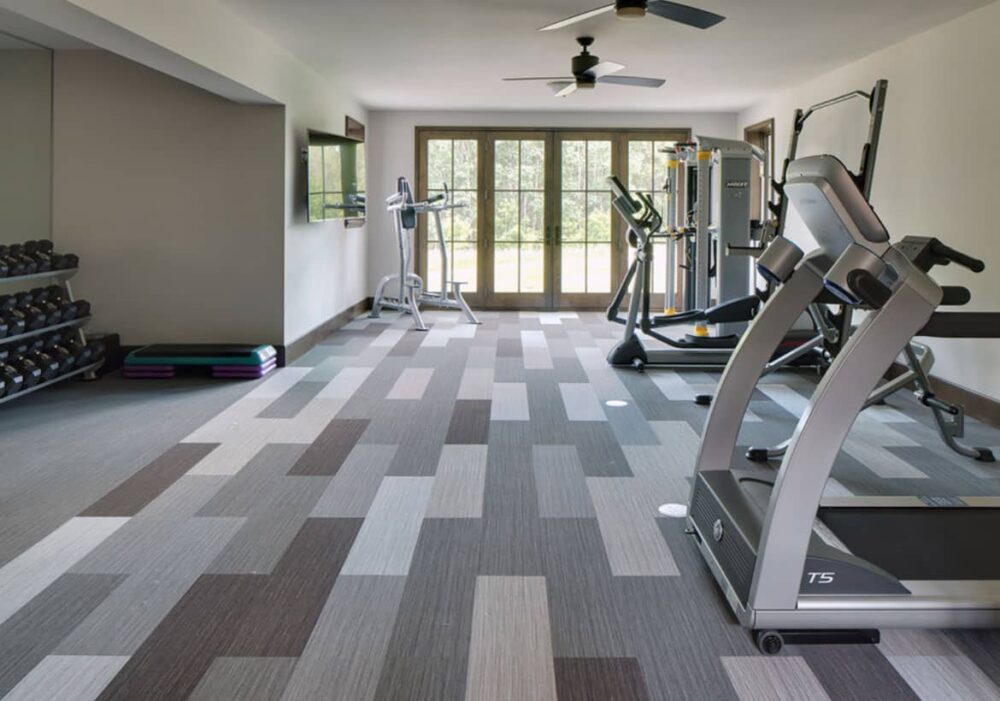
The flooring inside your fitness center does more than cover the concrete it determines safety outcomes, member experience, equipment longevity, and long-term maintenance costs. Getting it right the first time requires understanding which flooring solutions for fitness centers work in each specific zone, and why no single material serves every area of a commercial facility equally well.
Fitness Flooring has supplied and installed flooring for fitness centers, school gymnasiums, recreation centers, and commercial sports complexes across the United States for over 50 years. This guide walks facility managers through every zone of a fitness center, the best flooring options for each, and the critical decisions that separate a good installation from a great one.
Why Fitness Center Flooring is Not a One-Size-Fits-All Decision
A typical commercial fitness center has five or more distinct activity zones, each with different load requirements, moisture exposure, traction needs, and acoustic demands:
- Free weight and strength training areas high impact, equipment-heavy, chalk and sweat exposure
- Group exercise rooms repetitive impact, high-density traffic, noise-sensitive
- Cardio equipment zones concentrated machine weight, moisture pooling beneath equipment
- Functional training and turf areas lateral movement, sled work, agility drills
- Reception, lobby, and transition areas light traffic, aesthetic importance, slip resistance from outdoor footwear
Applying the same flooring across all of these zones results in premature wear in some areas, inadequate safety in others, and unnecessary cost in zones that didn’t need heavy-duty material. A zone-matched approach different materials in different areas is the professional standard for commercial fitness center flooring.
Zone-by-Zone Flooring Solutions for Fitness Centers
Zone 1: Free Weight and Strength Training Areas
This is the most demanding zone in any fitness center. Dropped weights, heavy equipment rolling across the surface, and constant chalk and sweat exposure put flooring under sustained stress. The right solution:
- Rubber tiles (8mm–15mm): The industry standard for weight rooms, providing shock absorption, subfloor protection, and noise reduction. Modular tiles allow section-by-section replacement as high-wear zones develop.
- Rubber rolls (3/8″–3/4″): Seamless coverage preferred for large open weight floors. No tile edges to lift or catch equipment wheels.
- Flecks rubber flooring: Fitness Flooring’s Flecks line is specifically engineered for weight room performance available in multiple thicknesses and colors to match facility aesthetics. See
- Deadlift platform inserts: High-density rubber platforms (15mm–25mm) installed within a standard rubber tile floor for Olympic lifting zones.
Zone 2: Group Exercise and Aerobics Rooms
Group fitness rooms see the highest foot-traffic density in any facility, often with 20–40 participants moving simultaneously across the same surface. The flooring must absorb repetitive impact without fatigue, maintain traction when wet with sweat, and minimize sound transmission to adjacent spaces.
- Exterra flooring: Fitness Flooring’s Exterra line available in MP2000, MP3000, and Classic configurations is engineered specifically for group exercise environments, offering layered cushioning, consistent surface traction, and acoustic dampening. See
- Sprung or floating floor systems: For high-impact aerobics and dance cardio classes, a sprung subfloor beneath a vinyl or rubber surface layer provides the additional shock absorption that reduces long-term joint injury among frequent class participants.
- Ananda hardwood systems: For studios that want the aesthetic of wood with the performance engineering of a fitness surface. See
Zone 3: Cardio Equipment Areas
Treadmills, ellipticals, and stationary bikes create concentrated static loads and generate significant moisture from user sweat. The flooring under and around cardio equipment needs:
- Dense rubber tiles or rolls that resist compression under machine footpads
- Moisture-resistant surfaces that don’t absorb sweat and remain hygienic between cleanings
- Vibration-dampening properties that reduce noise transmission to floors below
- Fitness carpets for facilities that prefer a quieter, more residential feel in their cardio zone Fitness Flooring supplies specialty fitness carpets engineered for gym environments. See
Zone 4: Functional Training and Turf Areas
The growth of functional training, CrossFit-style workouts, and HIIT programming has made turf strips and synthetic multi-purpose surfaces a standard feature in modern fitness centers. This zone requires:
- Synthetic gym turf: Designed for sled pushes, agility drills, and sprint work. Unlike outdoor turf, gym-grade synthetic turf is engineered for indoor use with a low-pile height and durable backing. See
- Corkboards and multi-use surfaces: For facilities needing a versatile functional zone that can accommodate everything from agility work to stretching. See
- Eklipse mats: Specialty mats for high-impact training zones within a larger functional area. See
Zone 5: Reception, Lobby, and Transition Areas
These areas see foot traffic from street shoes, outdoor footwear, and gym shoes creating a unique slip risk from dirt and moisture tracked in from outside. They also shape a member’s first impression of the facility. The right solutions:
- Protective surface tiles: Durable, aesthetically refined surfaces that handle transition-zone traffic without the bulk of heavy gym rubber. See
- Indoor/outdoor surfaces: For facilities with indoor-outdoor flow connecting a lobby to an outdoor training area specialty indoor/outdoor surfaces handle weather exposure and heavy foot traffic. See
Key Decisions in Fitness Center Flooring
Thickness Selection
Thickness affects shock absorption, subfloor protection, noise reduction, and cost. General guidance:
- 6mm–8mm: Light traffic, cardio equipment, reception areas
- 8mm–10mm: Standard group fitness, multi-purpose rooms
- 10mm–15mm: Weight rooms, high-impact group fitness
- 15mm+: Olympic lifting platforms, extreme drop-weight zones
Installation Method
- Glue-down: Best for permanent installations in high-traffic zones maximum stability but more complex removal
- Loose-lay: Suitable for lower-traffic areas or spaces where future reconfiguration is likely
- Interlocking: Fastest installation and easiest section replacement ideal for phased facility upgrades
- Poured-in-place: Most durable permanent solution no seams, no joints, no edges to lift
Maintenance Planning
The best flooring investment fails without a proper maintenance plan. Commercial fitness center flooring requires:
- Daily cleaning with pH-neutral, rubber-compatible cleaners
- Monthly inspection of high-traffic zones for surface wear indicators
- Quarterly deep cleaning of rubber surfaces to remove embedded oils and chalk
- Annual professional assessment of adhesion integrity for glued-down installations
How Much Does Fitness Center Flooring Cost?
Cost varies significantly by material, thickness, and installation method. General ranges for US commercial fitness center installations:
- Economy rubber tiles (8mm): $1.50–$2.50 per sq ft (materials only)
- Commercial-grade rubber rolls (3/8″): $2.00–$4.00 per sq ft
- Specialty group exercise flooring (Exterra): $3.00–$6.00 per sq ft
- Synthetic gym turf: $3.00–$8.00 per sq ft depending on pile specifications
- Poured-in-place rubber: $6.00–$12.00 per sq ft installed
Professional installation typically adds $1.00–$3.00 per sq ft depending on complexity and subfloor preparation requirements.
Case Study: Christ the King Church School
Christ the King is one of the largest private schools in the area, using its gymnasium for everything from school assemblies to community fish fries. The existing VCT tile while functional for multi-use events was not appropriate for court sports. Fitness Flooring supplied a zone-appropriate solution that balanced multi-purpose durability with court-sport performance. Read the full case study
FAQs About Flooring Solutions for Fitness Centers
What is the best flooring for a commercial fitness center?
There is no single best option the right flooring depends on which zones your facility has. Weight rooms need thick rubber (10mm–15mm). Group exercise rooms need cushioned, traction-optimized surfaces like Exterra. Cardio zones work well with rubber rolls or fitness carpets. A zone-matched approach provides the best combination of safety, durability, and cost efficiency.
How long does fitness center flooring last?
Commercial-grade rubber flooring typically lasts 10–15 years in high-traffic gym environments with proper maintenance. Specialty surfaces like Exterra group exercise flooring and poured rubber systems can last longer when correctly installed and maintained.
Can fitness center flooring be installed over concrete?
Yes most rubber tiles, rolls, and poured surfaces are designed for direct installation over concrete subfloors. A moisture assessment is essential before installation, as moisture transmission through concrete can compromise adhesion and cause rubber to lift or discolor.
What flooring is best for reducing noise in a fitness center?
Thick rubber tiles (10mm+) and sprung floor systems provide the best acoustic dampening. For facilities located above occupied spaces, an acoustic underlayment beneath the gym floor significantly reduces impact noise transmitted to the floor below.
Does Fitness Flooring provide installation services?
Yes. Fitness Flooring supplies and installs commercial fitness center flooring across the United States. Our team handles subfloor assessment, material selection, professional installation, and post-installation care guidance.
What is the most cost-effective flooring for a new fitness center?
Interlocking rubber tiles in the 8mm–10mm range offer the best balance of performance and cost for most standard gym zones. They allow phased installation and targeted replacement as zones wear differently over time reducing overall lifecycle cost compared to full-floor replacement.
Why Choose Fitness Flooring
- 50+ Years of US Commercial Experience: Schools, rec centers, sports complexes, boutique studios, and large commercial gyms
- Complete Zone Coverage: Rubber tiles, rubber rolls, Exterra group exercise, gym turf, fitness carpets, poured surfaces, and protective tiles
- Expert Zone Assessment: We match materials to your facility’s specific activity mix not a one-size recommendation
- Professional Installation: Nationwide installation teams with commercial gym flooring expertise
- Explore all products at
Conclusion
Choosing the right flooring solutions for fitness centers means matching the right material to each zone of your facility not picking a single product and applying it everywhere. Rubber tiles and rolls anchor the weight room and cardio zones. Exterra and sprung systems protect group exercise participants. Synthetic turf brings functional training to life. And the right protective surfaces in lobbies and transitions create a safe, professional first impression.
Fitness Flooring has helped US fitness centers get this right for over five decades. Contact us today to discuss your facility’s specific zones, budget, and timeline.
| Get Expert Flooring Guidance for Your Fitness Center Fitness Flooring’s team will assess your facility zones, activity types, and budget to recommend the right flooring solution backed by 50+ years of commercial installation experience.📞 Call 800-428-5306 | 💬 Chat 24/7 at fitnessfloors.com |